

Canada Payroll Deductions: Employer Guide to CRA Source Deductions
National regulations require employers to run payroll in accordance with government rules by deducting certain amounts from employee wages and remitting them to the Canada Revenue Agency (CRA). These deductions typically include income tax, Canada Pension Plan (CPP) contributions, and Employment Insurance (EI) premiums.
Payroll deduction rules help ensure that employees contribute to national programs such as retirement benefits, unemployment insurance, and other public benefit systems. Because these deductions are mandatory, employers must understand how they work to avoid penalties or compliance issues with the CRA.
This guide explains how payroll deductions work in Canada, what employers must deduct, how the deductions are calculated, and when they must be remitted to the CRA.
What Are Canada Payroll Deductions?
Canada payroll deductions are amounts that employers must withhold from an employee’s pay before issuing their salary. These deductions must then be remitted to the government.
Through payroll deductions, employers help fund national programs that support employees, including retirement income and unemployment benefits.
Understanding Payroll Deductions in Canada
Payroll deductions refer to the money taken from an employee’s paycheque before it is paid out. Employers are responsible for deducting these amounts and sending them to the government.
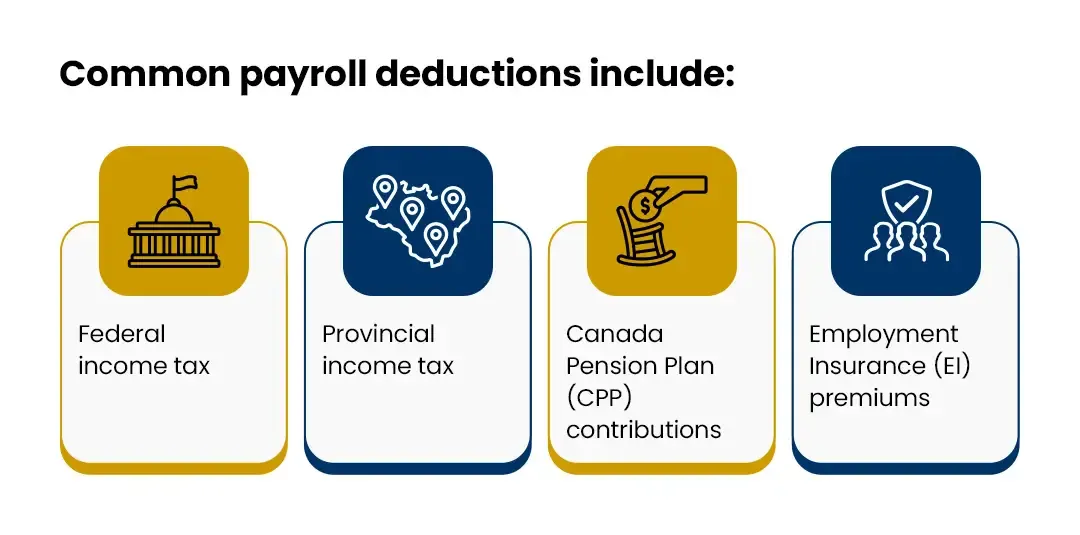
Common payroll deductions include:
- Federal income tax
- Provincial income tax
- Canada Pension Plan (CPP) contributions
- Employment Insurance (EI) premiums
These deductions help fund important social programs and provide financial support for employees during retirement or periods of unemployment.
Why Payroll Tax Deductions Are Mandatory for Employers
Employers must comply with Government of Canada regulations when managing payroll. They are legally required to deduct and remit payroll taxes on behalf of their employees.
Failure to properly deduct or remit payroll taxes may result in:
- Interest charges
- Financial penalties
- Additional enforcement actions from the CRA
Maintaining accurate payroll records and following deduction rules helps employers stay compliant with government regulations.
How Payroll Deduction Canada Rules Are Enforced by the CRA
Canada Revenue Agency Payroll Deductions Explained
The CRA requires employers to deduct and remit several types of payroll contributions. The most common deductions include income tax, CPP contributions, and EI premiums.
Income Tax Deductions
Employers must deduct both federal and provincial income tax from employee pay based on their earnings and tax bracket.
The CRA provides payroll deduction tables that employers can use to determine the correct income tax amounts to withhold.
Canada Pension Plan (CPP) Contributions
The Canada Pension Plan provides retirement benefits to eligible Canadians.
Employers must:
- Deduct CPP contributions from employee earnings
- Contribute an equal matching amount as the employer
These contributions are calculated based on pensionable earnings using rates set by the CRA.
Employment Insurance (EI) Premiums
Employment Insurance provides temporary financial support to employees who lose their jobs through no fault of their own.
Employers must deduct EI premiums from employee wages and also contribute an employer portion toward the program. EI contributions are calculated based on the employee’s insurable earnings.
Employer vs Employee Responsibilities for Payroll Deductions Canada
Both employees and employers are responsible for handling payroll deductions in Canada. Employers are responsible for calculating deductions, but employees are liable as their wages fund deductions to both incremental taxes.
| Responsibility Type | Explanation |
| Employee Contributions | Employees contribute to income tax, CPP, and EI through deductions taken directly from their salary. |
| Employer Matching Contributions | Employers must match CPP contributions and contribute a separate portion toward EI premiums. |
| Employer Payroll Reporting Obligations | Employers must calculate deductions, remit payments to the CRA, and file payroll reports accurately. |
How to Calculate Payroll Tax Deductions in Canada
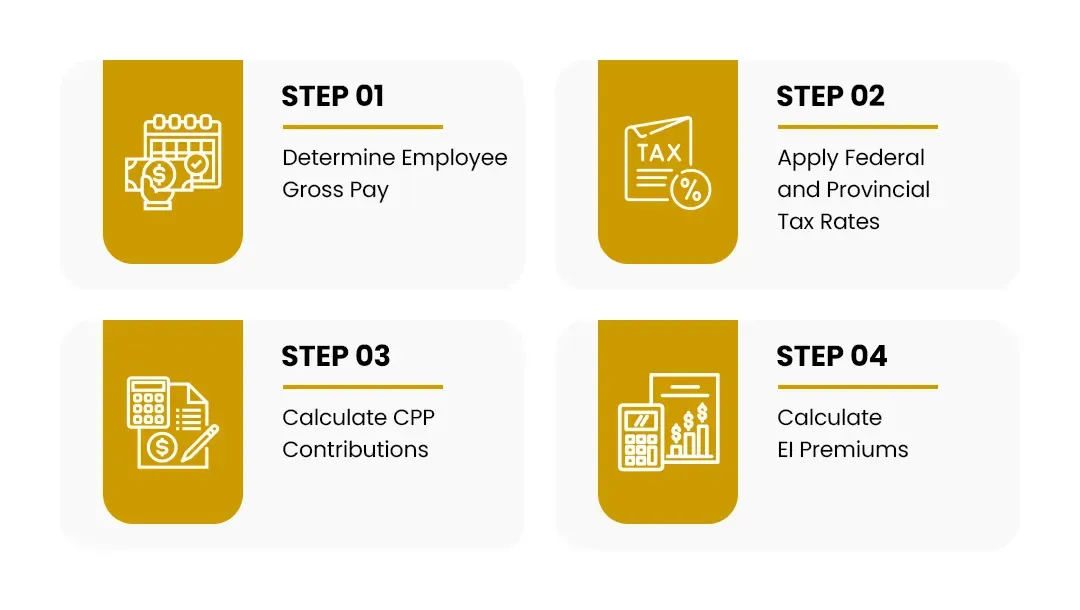
Step 1: Determine Employee Gross Pay
Gross pay is the employee’s total earnings before any deductions are made. This includes:
- Base salary
- Overtime pay
- Bonuses
- Commissions
Step 2: Apply Federal and Provincial Tax Rates
Income tax deductions depend on the employee’s total earnings and the province in which they work. Employers typically use CRA income tax deduction tables or payroll software to determine the correct tax amounts.
Step 3: Calculate CPP Contributions
CPP contributions are calculated based on pensionable earnings. Both the employee and employer must contribute to the plan.
Most payroll systems automatically calculate CPP deductions using the official rates provided by the CRA.
Step 4: Calculate EI Premiums
To calculate EI premiums, employers must determine the employee’s insurable earnings.
The employer then:
- Deducts the employee’s EI portion from wages
- Adds the employer contribution
These amounts are calculated using the official CRA deduction tables or payroll software.
Conclusion
Employers in Canada are required by law to deduct payroll taxes from employee wages and remit those amounts to the government. These deductions support important national programs such as retirement benefits and unemployment insurance.
To remain compliant, employers should use accurate payroll systems, follow official deduction tables, maintain proper records, and meet remittance deadlines set by the CRA.
Managing payroll deductions correctly helps businesses avoid penalties while ensuring employees receive the benefits funded through these contributions.
Payroll support services from Orbit Accountants can help simplify this process. With experience assisting businesses across Canada, Orbit Accountants provides reliable payroll processing, accurate tax calculations, and timely remittance to the CRA.
Managing payroll deductions can be challenging due to the complex rules involved. Orbit Accountants helps businesses handle payroll efficiently by ensuring accurate calculations, proper reporting, and full compliance with CRA regulations.
FAQs
What are payroll deductions in Canada?
Payroll deductions are amounts that employers withhold from employee wages before issuing their pay. These amounts typically include income tax, CPP contributions, and EI premiums and must be remitted to the government.
What are the main CRA payroll deductions?
The following are examples of some of the most common payroll deductions that must be deducted by employers as required by the CRA: federal income tax, provincial income tax, Canada Pension Plan contributions, and Employment Insurance premiums.
How do I calculate payroll deductions in Canada?
Employers calculate payroll deductions by first determining an employee’s gross pay and then applying federal and provincial tax rates. CPP contributions and EI premiums are also calculated using official CRA deduction tables or payroll software.
Disclaimer
This content is for informational purposes only and should not be considered professional tax advice. Businesses should consult a qualified accountant or tax professional for guidance specific to their payroll obligations.