

Canadian Payroll Guide 2026: CRA Rules, Deductions & Compliance Explained
Running a business in Canada requires balancing growth with compliance. As you scale, staying aligned with CRA requirements becomes just as important as managing operations. Whether you are a growing startup, small business owner, or established company, managing payroll is often one of the most time-consuming and compliance-sensitive parts of running a business.
Between GST/HST filings, provincial tax requirements, and ongoing CRA compliance obligations, payroll responsibilities can quickly become overwhelming. This guide breaks down the essentials of Canadian payroll, showing how you can transition from manual processes to streamlined, automated payroll systems.
Setting the Foundation: CRA Rules for 2026
Before you pay your first employee, you need a plan. Payroll compliance begins with obtaining a Business Number (BN) and registering for a payroll program account with the CRA. While professionals can assist with registration, the responsibility for compliance ultimately remains with the business and its directors.
Employee vs. Contractor
This is a common area where businesses face compliance challenges. The CRA assesses several factors, including the degree of control, ownership of tools, and financial risk. If you provide the tools and set the hours, they are likely an employee. If they have their own local bookkeeper and work for multiple clients, they might be a contractor. Misclassification can result in significant back-tax liabilities, penalties, and potential GST/HST implications.
The Payroll Cycle: From Onboarding to T4s
Payroll involves more than issuing payments. It is a structured process that supports accurate financial reporting and compliance.
Step-by-Step Payroll Flow
- Collection: Gather TD1 forms (Federal and Provincial).
- Calculation: Determine gross pay, including overtime and bonuses.
- Deductions: Subtract CPP, EI, and federal/provincial income tax.
- Remittance: Send the withheld amounts to the CRA.
- Reporting: Issue pay stubs and prepare for year-end tax filing.
For those in the West, payroll considerations may vary depending on provincial regulations, such as Alberta tax credits or Ontario employer health tax requirements.
Deductions Decoded: CPP, EI, and Income Tax
Calculating deductions manually increases the risk of errors. Using cloud-based accounting and payroll software can significantly improve accuracy and efficiency.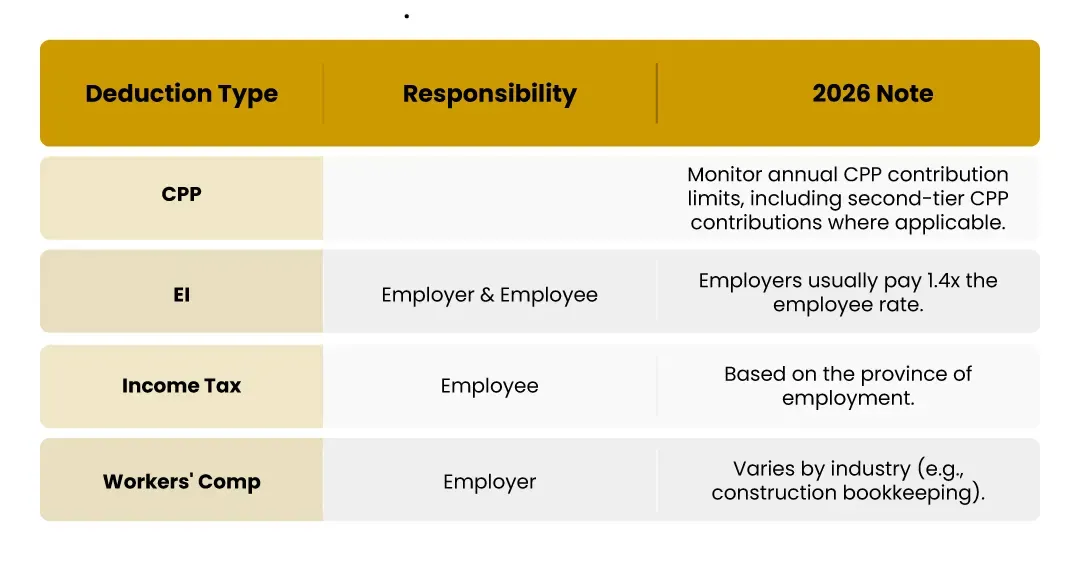
If records are not up to date, businesses may require catch-up bookkeeping or a cleanup to ensure compliance to get your records straight before the next CRA audit.
Modern Tools: QuickBooks Online, Xero, and Hubdoc
Most modern businesses now rely on digital accounting systems. Modern bookkeeping is digital and often mobile.
- QuickBooks Online & Xero bookkeeping: These platforms allow for accounting automation, syncing directly with your bank feeds.
- Hubdoc setup: This tool helps streamline document collection and supports paperless bookkeeping workflows. It “reads” your receipts and pushes them into your accounting software.
- Virtual bookkeeper: By using an online accounting model, you can access skilled professionals remotely across Canada.
Whether you need nationwide bookkeeping support or province-specific expertise, these tools help provide more accurate, real-time financial visibility.
At Orbit Accountants, we help businesses implement integrated payroll systems using tools like Xero, QuickBooks, and Dext—giving you real-time visibility and reducing compliance risk.
Scaling with an Outsourced CFO and Fractional Services
As your business grows, your needs may extend beyond bookkeeping to include strategic financial guidance.
A Fractional CFO provides high-level budget planning and cash flow management without the cost of hiring a full-time executive. They help with audit preparation and support more proactive tax planning and financial decision-making.
For many firms, outsourced CFO services are the bridge between being a “small shop” and scaling into a more structured and financially optimized business.
Common Pitfalls: How to Avoid a CRA Audit
The CRA places significant importance on consistency in reporting. If your payroll services don’t match your corporate tax filings, it may trigger additional scrutiny.
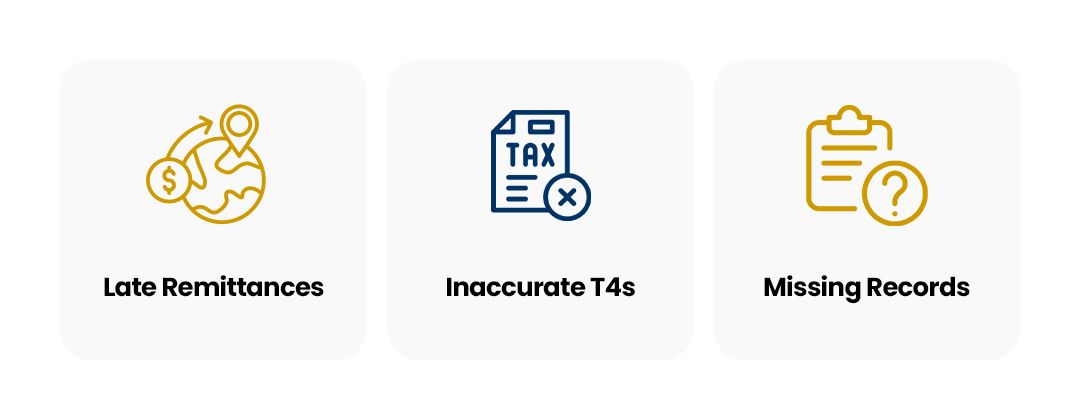
- Late Remittances: Late remittances may result in penalties and interest charges.
- Inaccurate T4s: Ensure taxable benefits (like company cars or health plans) are included.
- Missing Records: The CRA generally requires records to be retained for at least six years. Cloud-based recordkeeping is one of the most efficient ways to maintain organized records.
If you are worried, a professional accountant or a qualified accounting professional can perform an internal review or “mock audit”to find gaps in your accountancy services. At Orbit, we often see payroll issues arise from inconsistent reporting and missed remittance deadlines—both of which are avoidable with the right systems in place
FAQs (Based on 2026 Guidelines)
How often can payroll be processed?
Most Canadian businesses process payroll on a weekly, bi-weekly, or semi-monthly basis. Bi-weekly is the most common for small-business CPA clients as it aligns well with cash flow cycles.
What is included in your payroll & HR management services?
Comprehensive payroll and accounting services may include direct deposit, tax remittances, T4/ROE preparation, and often Hubdoc setup for expense management.
Why should I choose certified payroll management services?
Accuracy is everything. A professional accountant ensures you aren’t overpaying or underpaying taxes. This protects your financial reporting and helps ensure smoother year-end reporting and compliance.
What support do you offer for CRA queries and audits?
We provide full audit preparation and representation. Whether it’s a provincial review or a CRA audit, having experienced accounting support can be highly valuable
How much do your payroll services cost?
Costs vary based on the number of employees and the complexity of your accountancy firm needs. Many virtual bookkeeping providers offer predictable, fixed monthly pricing.
External Links for Reference
- CRA Payroll Deductions Online Calculator
- Employment Standards Ontario
- BDC Guide to Small Business Payroll
- Xero Canada Small Business Guide
- QuickBooks Canada Payroll Resources
Legal Disclaimer:
The information provided in this blog post is for general informational purposes only and does not constitute professional accounting, tax, or legal advice. While we strive to keep information up to date (current as of 2026), Canadian tax laws and CRA regulations are subject to frequent change. Every business has unique requirements; therefore, you should consult with a qualified Toronto CPA, Calgary accountant, or legal professional before making any financial decisions or implementing payroll systems. Orbit Accountants is not liable for any errors or omissions in this content. Examples provided are for illustrative purposes only and may not apply to all business situations.