Cash vs Accrual Accounting: Definitions, Timing, and Choosing the Right Method
Numbers tell stories. The question is: when should that story be written?
That’s where cash vs accrual accounting come in.
Both methods record the same transactions, just at different moments. One waits for money to move. The other doesn’t. Pick the wrong one, and your profits, taxes, and cash flow could look completely off.
Let’s break it down in a simple layout and figure out which accounting method cash vs accrual makes the most sense for your business.
What “Cash Basis” means and When It Records Income and Expenses
Cash basis accounting is simple: you record money when it moves.
That’s it.
When the cash hits your account, it’s income. When it leaves, it’s an expense without invoices, any wait on receivables and complicated adjustments.
Example:
You send a $5,000 invoice in December. The client pays in January.
Under cash accounting, you count it in January.
Why small businesses like it
- It’s easy to track and understand.
- You always know how much cash is on hand.
- You don’t pay tax on money you haven’t received yet.
It’s perfect for freelancers, consultants, and small firms that want bookkeeping to stay as light as possible.
But simplicity has a cost; you might not see the whole picture.
If you’ve ever wondered what is cash accounting, it’s this approach; based purely on actual cash flow rather than promises or invoices.
Are you confident your business tax filings are fully optimized and compliant?
What “Accrual Basis” Means and Why Timing Follows Earning and Incurring
Accrual accounting doesn’t wait for cash. It records revenue when you earn it and expenses when you owe them.
In other words, it reflects what’s really happening and not just what’s in the bank.
Example:
You complete that same $5,000 job in December. The client pays in January.
Under accrual accounting, the income belongs to December because that’s when the work was done.
Why it’s often required
- Gives a realistic picture of your profits.
- Matches income and expenses to the same period.
- Follows GAAP, which lenders and investors prefer.
If you have inventory, extended payment terms, or long-term projects, what is accrual accounting becomes clear; it’s about recognizing financial activity when it actually happens, not when money moves.
It may take more effort but it’s the accounting method cash or accrual that helps a business grow up.
The Timing Difference that Changes Reported Profit and Tax Timing
Here’s the thing. The only difference between cash and accrual accounting is timing, but that small detail can change your reported profit and tax bill.
- Cash basis: Profit appears when money arrives or leaves.
- Accrual basis: Profit appears when work happens or costs are incurred.
That’s why the same transaction can land in different months or even different tax years, depending on your accounting basis cash or accrual.
Why it matters
If you’re on the cash basis, you can delay an invoice in December and lower your taxable income for the year.
If you’re on the accrual basis, you can’t do that. Once revenue is earned, it’s taxable, even if the cash hasn’t arrived.
This timing difference doesn’t just affect taxes; it affects how you plan, forecast, and make spending decisions.
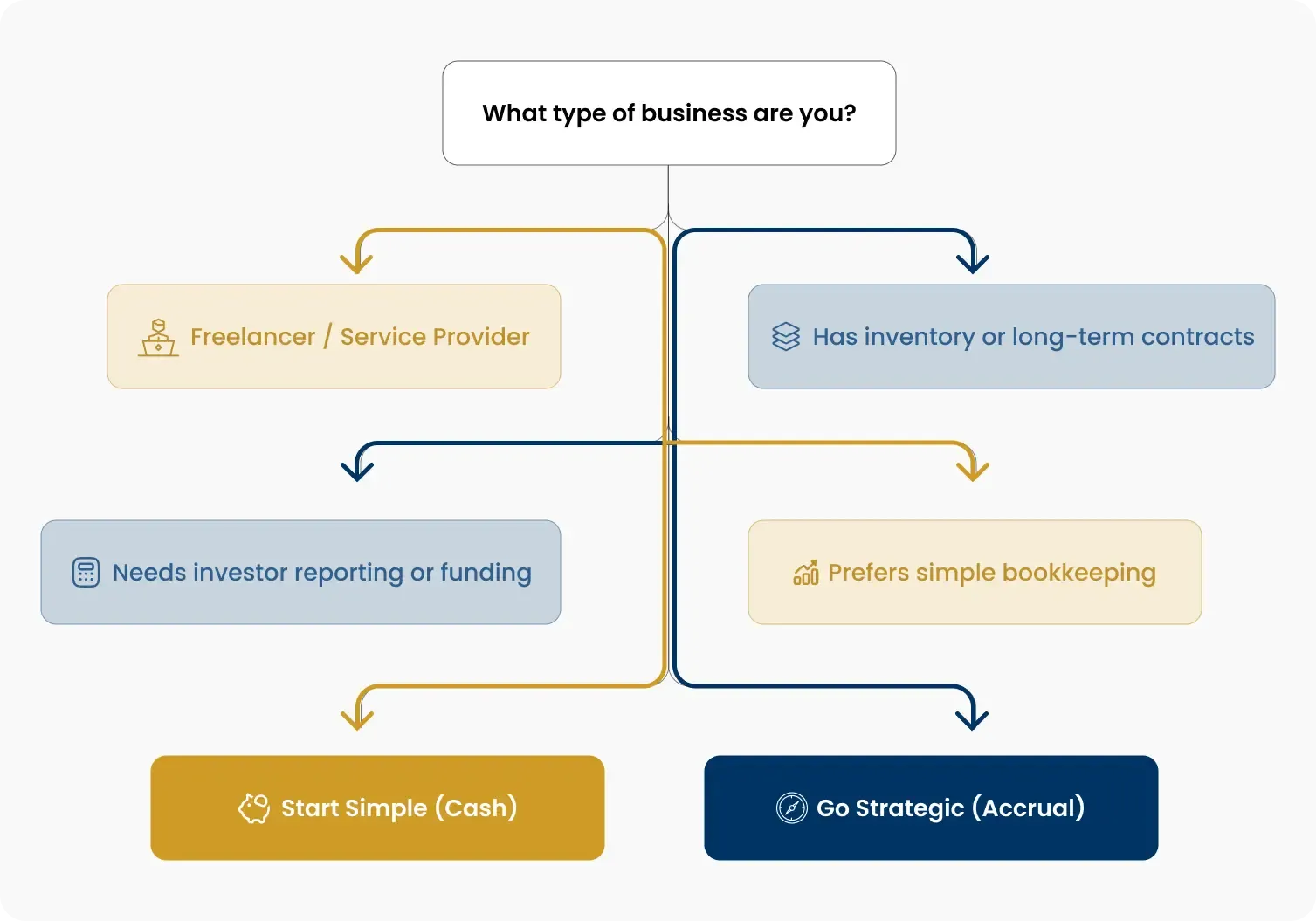
Cash vs Accrual: Decision Criteria for Small Businesses
Not every small business needs accrual accounting right away.
Here’s how to decide which fits your current stage.
Go with cash basis if:
- You’re a freelancer or service provider with few invoices.
- You want straightforward bookkeeping.
- You mainly track cash coming in and going out.
Go with accrual basis if:
- You manage projects over time or offer payment terms.
- You hold inventory or sell products.
- You want reports that truly show performance.
- You’re preparing for funding, growth, or audits.
Still unsure? Think about what you value more: simplicity or accuracy.
If cash flow visibility is key, start with cash. If you’re scaling, accrual gives you the edge.
This section especially helps those researching cash vs accrual accounting for small business; a common decision point for growing entrepreneurs who want to stay compliant while planning for expansion.
Pros & Cons That Actually Impact Operations
Every cash or accrual accounting method has trade-offs. Here’s what they look like in daily operations.
Cash Method
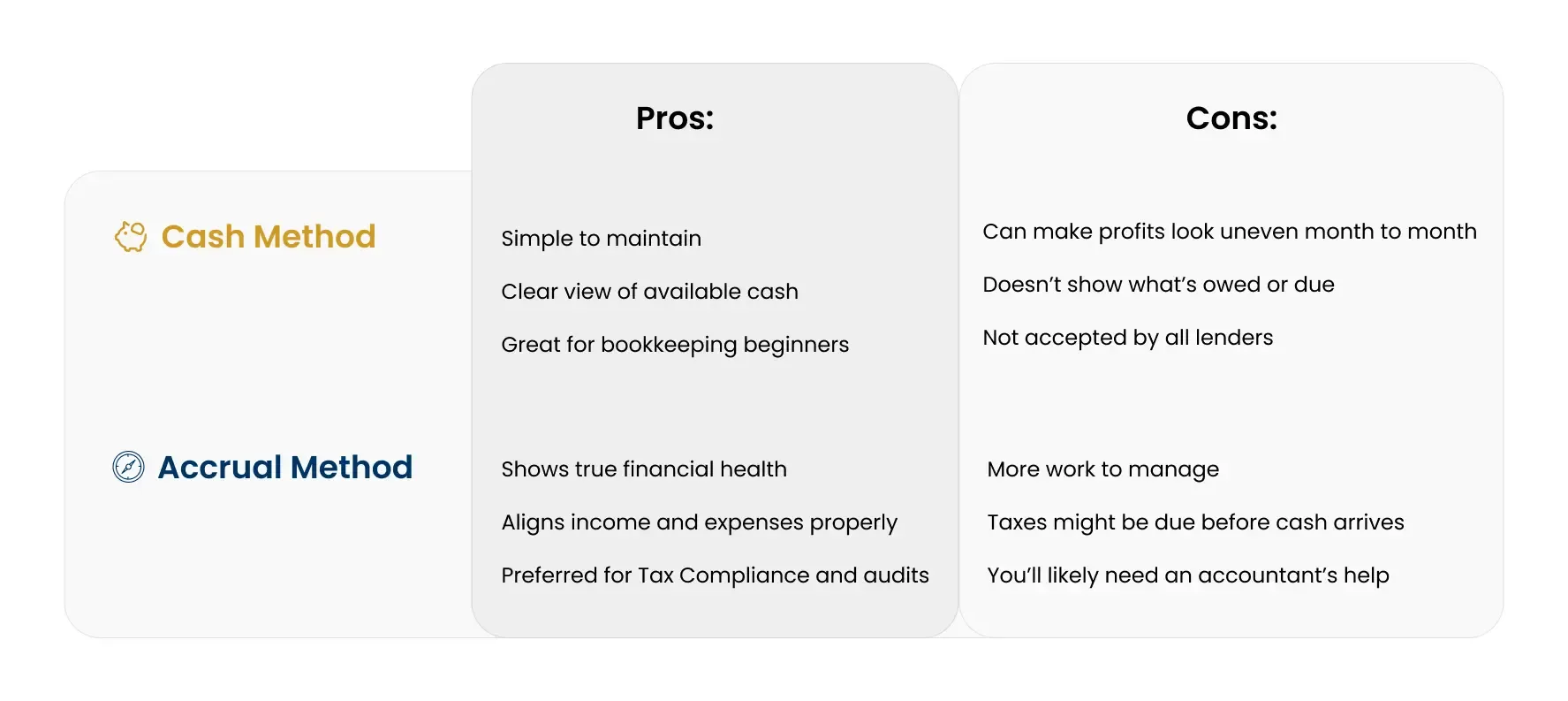
Both can work, but one fits better depending on where your business is headed.
This contrast highlights accounting method cash vs accrual decisions small businesses must make when balancing simplicity and precision.
One Scenario to See the Difference (December Invoice, January Cash)
This one scenario says it all:
- You send an invoice on December 29 for $10,000.
- Payment hits January 15.
Under cash accounting, that’s January income.
Under accrual accounting, it’s December income.
Same job, same money, different year and possibly a different tax outcome.
This quick example perfectly sums up what is the difference between cash and accrual accounting in real terms.
Taxes, Compliance, and How Switching Methods Works
Once you choose an accounting method, stick with it.
The IRS expects consistency.
If you ever need to switch; say, from cash to accrual as you grow, it’s not as simple as flipping a switch. You’ll need to file Form 3115 (Application for Change in Accounting Method) and adjust your books for things like:
- Outstanding invoices and bills
- Prepaid expenses or deferred income
- Inventory and cost of goods sold
Switching can be smart, but it should be done carefully with professional help. A misstep here can lead to mismatched figures or unnecessary tax liability.
This quick example perfectly sums up what is the difference between cash and accrual accounting in real terms.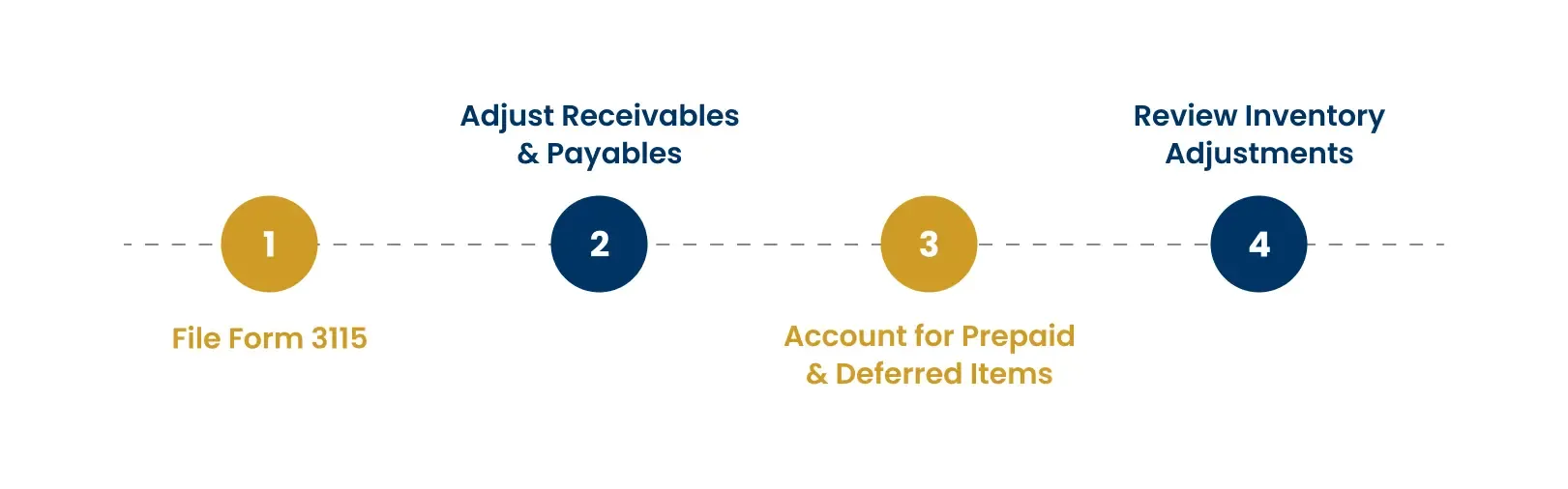
Bottom Line: Match the Method to Cash Control, Reporting Accuracy, and External Requirements
Both accounting methods work. The right one depends on your goals.
- Choose cash if you’re small, self-funded, and want easy bookkeeping.
- Choose accrual if you’re growing, managing inventory, or seeking investors.
If you don’t have complex transactions, start simple. If you do, go professional.
Either way, your method should tell the real story of your business and not confuse it.
This is the essence of accounting basis cash or accrual, it’s about matching the method to your operations, not just your balance sheet.
Also read: Are Tax Preparation Fees Deductible for Small Business Owners?
Frequently Asked Questions
Does accrual accounting mean paying tax on sales before the cash arrives?
Yes. Accrual recognizes income when earned, so tax can apply before payment is received.
Can a business start on cash basis and switch later?
Definitely. Many small businesses begin on cash basis and move to accrual once operations expand or lenders get involved.
Why do cash-basis reports look uneven?
Because income only appears when cash arrives. Busy months look huge, quiet months look poor, even if work is steady.
Which method fits long projects or subscriptions?
Accrual works best. It records revenue as you deliver value, not just when the money shows up.
Will investors or banks prefer accrual statements?
Almost always. They want a clear, consistent view of your earnings and obligations.
How does inventory change the choice?
If you hold stock, the IRS typically requires accrual to match sales with inventory costs.
What’s needed to switch methods properly?
An accountant will adjust receivables, payables, and other balances so your books line up with the new approach.
Legal Disclaimer: This article is for informational purposes only and not intended as professional tax or accounting advice. Always consult a qualified accountant before making financial decisions.