
T2 Tax Return Canada: What You Need To Know?
There is no question that if you own a corporation in Canada, knowing about your tax obligations is very important. One of those obligations is the annual filing of your T2 tax return. Many business owners frequently ask ‘What is a T2 tax return?’ and ‘Do I have to file one?’
Generally speaking, nearly all corporations in Canada are required to file a T2 tax return, even if the business has no revenue. The T2 is used by the Government to determine how much Corporate Tax a corporation owes. If you file correctly and on time, then you will ensure that your business is compliant with the law and avoid possible penalties.
The goal of this blog will be to provide you with the information you need in a straightforward manner, so you can understand the entire process very clearly.
What Is a T2 Tax Return?
The T2 corporate income tax return is the form corporations use to report their taxable income and tax liability to the Canada Revenue Agency (CRA). This report provides details about the corporation’s income/earnings and the tax obligation.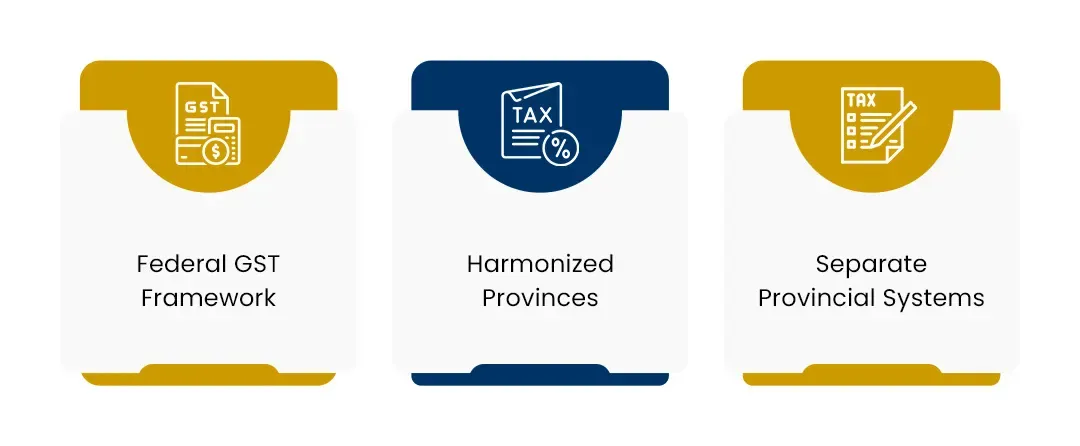
The T2 is different than a T1 which is for the individual taxpayer. The individual taxpayer will file a T1 when reporting their personal income while the corporation will file a T2 when reporting the corporation’s income/earnings.
Most corporations resident in Canada must file a T2 corporate income tax return each year, even if the corporation had no income or business activity during the year, regardless of whether they earned any income and/or owe tax. Inactive companies are included in this requirement. The T2 report is submitted annually by all resident incorporated companies.
Information Required to Prepare a T2 Income Tax Return
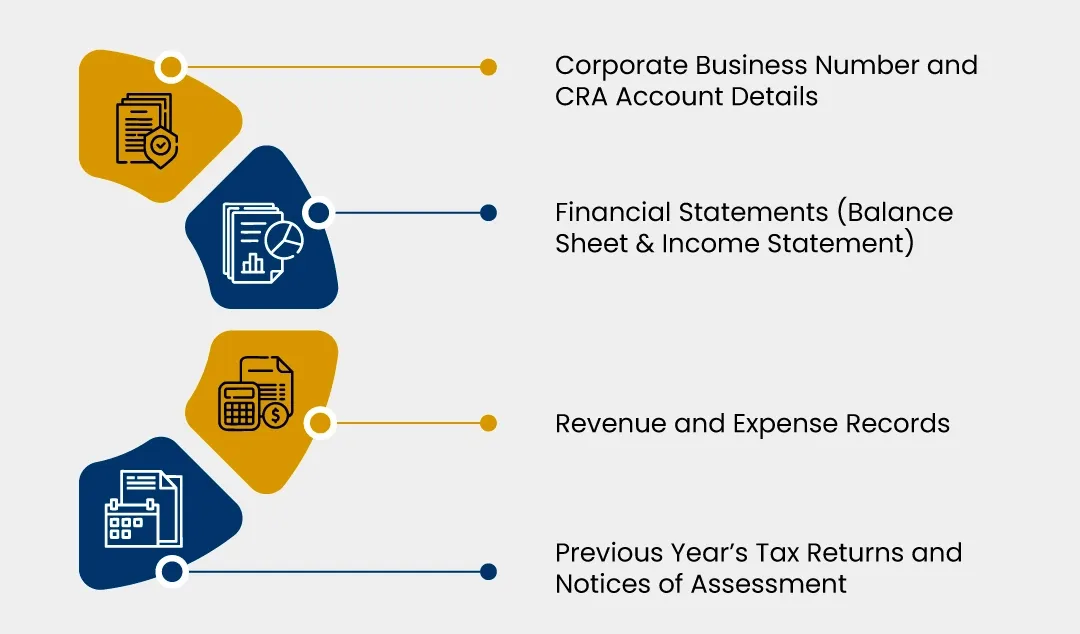
Prior to preparing your T2 Corporate Income Tax return, you will want to collect all relevant documents in advance. This will ensure accurate and timely filing.
Corporate Business Number and CRA Account Details
To properly prepare your corporation’s Corporate Tax Return (T2), you will first need to obtain its Corporate Business Number (BN) from the CRA. This number will allow for linking your corporation with its respective tax accounts, which in turn will ensure accurate reporting of your corporation’s tax liabilities.
Financial Statements (Balance Sheet & Income Statement)
Financial statements include a balance sheet (a snapshot of the corporation’s assets, liabilities, and equity) and an income statement that reports revenue and expenses. Both financial statements should match your accounting records and form part of the foundation for calculating and filing your tax return.
Revenue and Expense Records
You must keep detailed records of all of the corporation’s sales, service, and other income as well as expenses incurred for rent, salaries, utilities, and supplies, etc. Record keeping will determine the correct calculation of profit and minimize the risk of an audit.
Previous Year’s Tax Returns and Notices of Assessment
Last year’s filed return and CRA notice of assessment help you check carry-forward amounts, balances owing, and installment payments. They also ensure consistency in reporting year after year.
Key Components of the T2 Corporate Income Tax Return
The T2 Corporate Income Tax Return form (T2) from the CRA has numerous schedules which provide proof of how taxes are calculated. Each of these schedules provides a different purpose, and each must be filled out correctly.
| Schedule | Purpose |
|---|---|
| Schedule 1 – Net Income (Loss) For Tax Purposes | Adjusts accounting profit for use in determining the taxable income based on the tax rules. |
| Schedule 4 – Capital Cost Allowance (CCA) | The CCA schedule allows you to calculate the depreciation on business assets such as equipment and vehicles. |
| Schedule 8 – Capital Cost Allowance Details | This schedule itemizes the different asset classes for the corporation and the amount of CCA claimed for each asset in each taxable period. |
| Schedule 50 – Shareholder Information | Lists corporation shareholders and their ownership percentages. |
| Other Supporting Schedules as Required | Includes extra schedules depending on business activities and tax credits claimed. |
Common Errors in CRA T2 Tax Return Filings
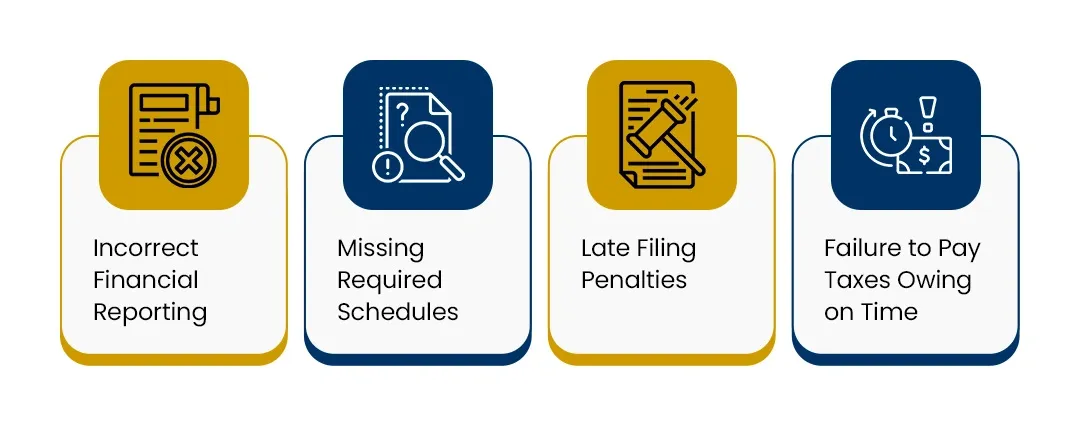
Filing corporate taxes can be very complicated; there can be significant problems related to filing corporate income tax returns. If you understand where to look for errors, you can help to prevent them from occurring.
Incorrect Financial Reporting
If you report your revenue or expenses inaccurately, it will affect your taxable income. The difference in your financial statements and the tax schedules may create a reason for the CRA to question your input or conduct a reassessment at a later date.
Missing Required Schedules
Submitting your return without required schedules such as Schedule 50 or CCA schedules will mean that your return is being submitted incomplete. The CRA may reject your return and/or delay processing your submission.
Late Filing Penalties
The CRA may charge penalties if your return is filed after the deadline. The penalty is typically calculated as a percentage of unpaid tax, and interest may be charged daily until the balance is paid, until your return has been submitted.
Failure to Pay Taxes Owing on Time
Filing a return on time but not making tax payments by the due date results in the tax owing, being subject to interest charges. Making estimated tax payments, prior to the due date, will ultimately reduce your financial pressure.
How to Simplify Your T2 Corporate Tax Return Process
By getting into good habits, you’ll be able to manage your corporate taxes more quickly and easily. The more accurate your books are throughout the year, the less stress you will have at tax time. Creating an accurate set of records with regular bookkeeping will allow you to easily file your return.
You can track all income, expenses, payroll and assets using reliable accounting software. It will help you maintain organization and reduce errors, by automating your processes, which will save you an enormous amount of time.
If you are looking for a corporate tax expert, then Orbit Accountants is the right name for you. Our team of experts will offer you knowledgeable advice, guide you through CRA compliance and manage the entire tax filing process so you can focus on growing your business.
Conclusion
All incorporated businesses in Canada must understand how to properly file an Income tax return (T2). Doing this in a timely and accurate manner will keep your corporation compliant, delaying penalties. From document collection to form submissions, each step is of equal importance.
At Orbit Accountants, we have extensive experience providing tax compliance services for Canadian businesses. Our team can assist corporations with filing accurately, developing planning strategies and communicating with CRA. Let us take the complexity out of corporate taxes so you can operate your business confidently and worry-free.
Disclaimer: This article is for informational purposes only and does not constitute tax, accounting, or legal advice. Tax obligations may vary depending on the corporation’s circumstances. Businesses should consult a qualified tax professional or the CRA for advice specific to their situation.
Frequently Asked Questions
1. What is the T2 tax return used for?
The T2 tax return is the official federal income tax return for corporations in Canada. Corporations use the T2 Tax Return for determining their corporate income tax and for claiming deductions and credits.
2. How do I file a T2 corporate income tax return?
Typically, the corporate tax return T2 should be filed electronically using CRA approved software. Corporations are required to file an electronic version of the T2 tax return within six months of the end of their fiscal year and to pay the required taxes by the deadline.
3. Can I file a T2 return with no income?
Even a corporation that did not earn income during the year (or did not conduct any business), is still required to file an annual T2 tax return to maintain compliance with CRA standards.
4. What are the penalties for filing late?
If you file your T2 tax return late, you will be charged a penalty calculated as a percentage of the unpaid taxes, plus daily interest on that amount. The longer you wait to file your T2 tax return, the more penalties and interest you will have to pay.