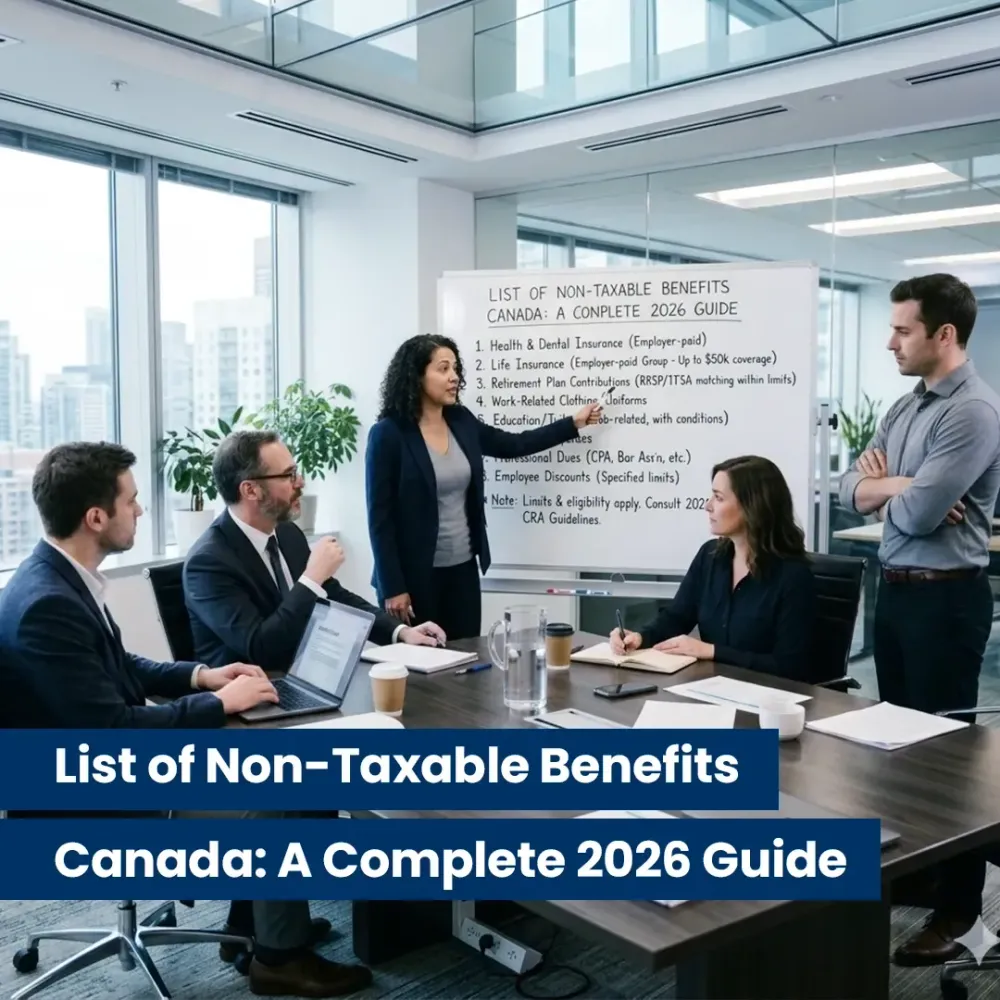
List of Non-Taxable Benefits Canada: A Complete 2026 Guide
An employee’s salary is no longer the sole source that is evaluated when assessing a job offer. Benefits have become an important part of evaluating a new job offer in Canada. Many benefits can be non-taxable if they are structured correctly.
The Canada Revenue Agency provides guidelines for classifying benefits as being either taxable or non-taxable. The classification of benefits directly affects the net pay an employee receives and assists in saving money through the provision of non-taxable benefits by employers to reduce the payroll cost of employee compensation.
In 2026, the Canada Revenue Agency will continue to refine the manner in which it assesses benefits. It will continue its focus on the purpose of the benefit; that is, does it provide a business purpose or a personal benefit? Understanding the rules regarding taxable and non taxable benefits can assist employers in maintaining compliance with the rules and assist employees in making better informed financial decisions.
This blog will provide you with an overview of the latest list of taxable and non taxable benefits Canada, the key differences, and the reasons they are important.
What are Non Taxable Benefits?
Non taxable benefits for employees are types of employer-provided perks that do not increase an employee’s taxable wages. Employees do not pay taxes on these perks. Non-taxable Benefits do not qualify as income according to the CRA; however, there are many restrictions on what can be treated as non-taxable. The non-taxable benefit must be directly related to performing a job duty or enhancing employee well-being.
One example of a non-taxable benefit for employees is when an employer subsidizes all, part, or none of their employees’ health insurance or counseling services. Providing non-taxable benefits typically increases productivity and decreases financial strain.
From 2026 forward, the CRA will use a specific and nuanced methodology to determine whether a benefit favors an employee or an employer. If a benefit primarily benefits the tools, systems, and processes of an employee’s employer, the item cannot be taxed to an employee.
Employers should maintain proper documentation to support their non-taxable benefit expenses. Employees should also be familiarized with the benefits they receive so they can report them accurately and avoid incurring tax liabilities later.
Difference Between Taxable and Non-taxable Benefits
The Canada Revenue Agency (CRA) sets the difference between taxable and non taxable benefits through classification of the benefit based on the person who realises the most benefit from the benefit.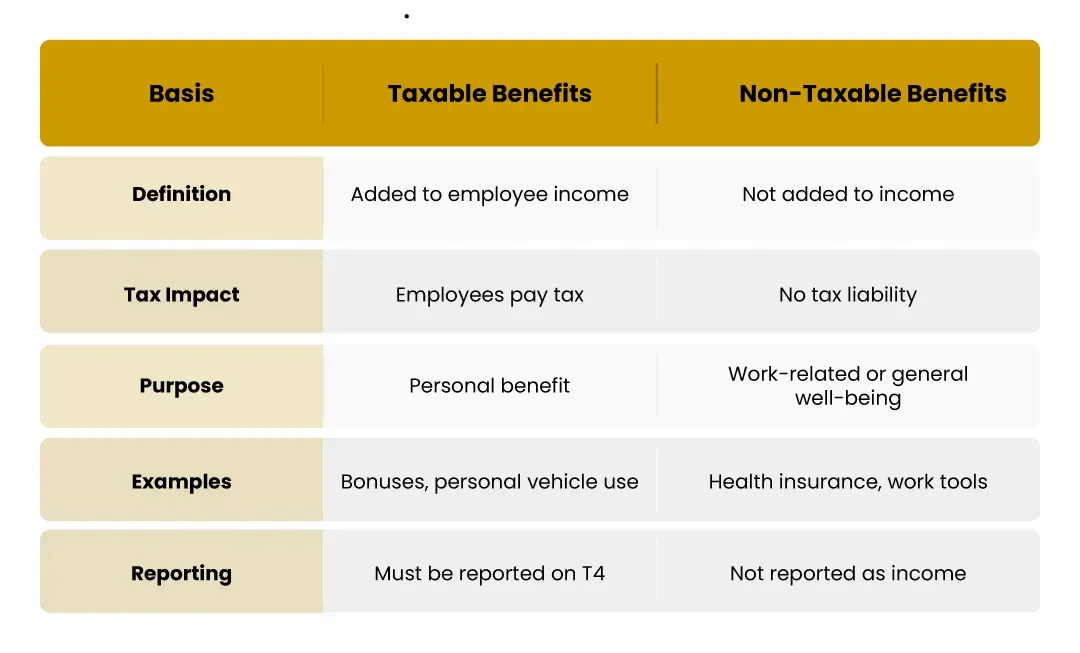
Understanding the differences in taxable and non-taxable benefits can help employers remain in compliance, as well as help employees from getting “surprised” by taxes during tax season.
List of Non Taxable Benefits Canada
Non taxable benefits for employees continue to be an essential component of employee compensation for 2026. The Canada Revenue Agency (CRA) still recognizes a number of benefits that are tax-free as long as they meet the necessary eligibility criteria. It is important for employers to classify benefits correctly, particularly for mixed-use items such as mobile devices or internet access. When structured properly, these examples of non taxable benefits that can help to enhance employee satisfaction without creating a tax liability.
- Employer-paid health and dental premiums
- Vision care and prescription drug coverage
- Mental health support and Employee Assistance Programs (EAPs)
- Group accident or sickness insurance (eligible plans)
- Non-cash gifts and awards up to $500 annually
- Professional development and job-related training
- Work-related tools and equipment
- Uniforms and safety gear
- Business-use parking
- Overtime meals and business travel expenses
- Public transportation (work-related use)
- Work-related mobile and internet usage
- Relocation expenses for eligible transfers
Non-Taxable Benefits for Employees: Why They Matter
Non taxable benefits in Canada do more than save tax. They improve financial stability and employee experience. They also help employers build stronger teams.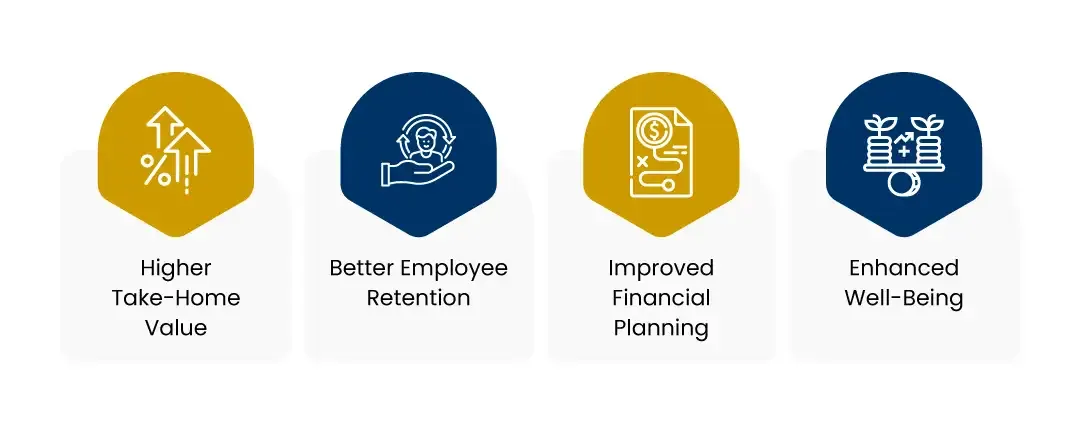
1. Higher Take-Home Value
Employees will keep more of their earnings, with many of their employee benefits not being taxed. Consequently, with the same amount of taxable income, the net effect will be increased real income and more efficient use of salaries, ultimately leading to a more attractive means of compensating employees.
2. Better Employee Retention
Employees that receive tax-free benefits will more often return to work at that organization. Employees are typically more satisfied with their tax-free job perks and will tend to remain employed at organizations that provide strong tax-favored total compensation packages.
3. Improved Financial Planning
Having a lower taxable income gives employees greater opportunities to plan for their future by being able to more effectively manage their savings and spending. It also provides an opportunity to eliminate stress around tax season.
4. Enhanced Well-Being
Employees will have access to health & wellness benefits; therefore, employees will be able to improve their overall mental & physical health which ultimately will lead to increased productivity and improved performance at work.
Conclusion
Non taxable benefits in Canada perks have never been more important to the world of modern compensation. They create an environment for employees to save additional money and for employers to provide an overall better quality of life for their employees. Plus, employers continue to offer competitive packages while avoiding higher taxation costs.
By 2026, complying with CRA guidelines will become an even more significant concern. Misclassification can result in costly penalties. Therefore, careful planning will ensure you are compliant as well as maximizing your value as a both an employee and an employer.
Companies must constantly evaluate their benefits packages. Employees also need to understand what they are receiving. A proactive strategy can yield significant improvements in overall financial performance.
If you require assistance, Orbit Accountants would be happy to assist. We specialize in providing expert tax compliance assistance and consulting with businesses on how to structure their employee benefits package properly. The professionals at Orbit Accountants help businesses remain compliant while taking full advantage of all the tax benefits available.
FAQs
What is the meaning of non-taxable benefits?
Non-taxable benefits are perks provided by an employer to an employee that will not be treated as income by the Canada Revenue Agency (CRA). The employee will not have to pay taxes on these benefits as long as they meet CRA guidelines.
What are some examples of non-taxable benefits in Canada?
Common non-taxable benefits in Canada include employer-paid healthcare insurance, mental-health support programs, and non-cash gifts with a total value less than $500 in a year (as determined by the CRA). Also on this list are work-related training and work-related tools.
How can I tell if a benefit I received is taxable or not?
A good rule of thumb is to check who benefits from it the most. If you will receive the greatest benefit from the item, then it is likely to be taxable to you. If your job or health will be supported by the item, it could potentially be a non-taxable benefit according to CRA guidelines.
What is the distinction between taxable benefits and non-taxable benefits?
Taxable benefits will increase an individual’s taxable income and must be declared on the individual’s income tax return. Conversely, a non-taxable benefit to an individual does not increase their taxable income and does not have to be declared on an individual’s income tax return.
Do all employee benefits qualify for exemption from taxation?
No. Only benefits that satisfy the criteria established by the CRA are considered non-taxable. If a benefit will provide a personal gain to the individual or if it does not satisfy the guidelines, the CRA will classify it as a taxable benefit.