
Property Tax Look Up Toronto: How to Find and Understand Your Bill
Property owners in Toronto are responsible for paying property taxes, which fund essential community services such as garbage collection, education, and public transit. Yet many homeowners and buyers find it challenging to understand how these taxes are assessed. To help with this, the City offers a Property Tax Lookup Tool that provides an easy online way to access tax information.
Understanding your property tax bill—and how to use the Toronto Property Tax Lookup Tool—is essential for anyone who owns property in the city. Toronto calculates property taxes using Municipal Property Assessment Corporation (MPAC) assessments, municipal tax rates, and annual updates, but the process can be confusing. With the lookup tool, property owners can quickly check their tax amount, payment due dates, and assessment details in one convenient place.
This blog post will describe what a property tax is and how the Property Tax Lookup Tool can help you.
What is Property Tax in Toronto?
Toronto property tax is a municipal tax calculated using the assessed value of your property as determined by the MPAC. These taxes are paid annually and help fund essential City services such as waste collection, public transit, parks, libraries, emergency services, policing, and road maintenance. The amount you owe is based on your property’s assessed value and the municipal tax rates set by the City of Toronto.
Why Use the Toronto Property Tax Look Up Tool?
The Toronto Property Tax Lookup Tool provides reliable information about the amount of property tax owed, the due date for payments, and any changes made to the appraised value of a property. In addition, it offers buyers the ability to make an informed decision with transparency prior to buying a property.
How to Access the City of Toronto Property Tax Look Up Tool
The City of Toronto Property Tax Lookup page allows homeowners and buyers to search taxes by address or assessment roll number, making it the fastest way to verify your Toronto property tax balance, instalments, and outstanding charges.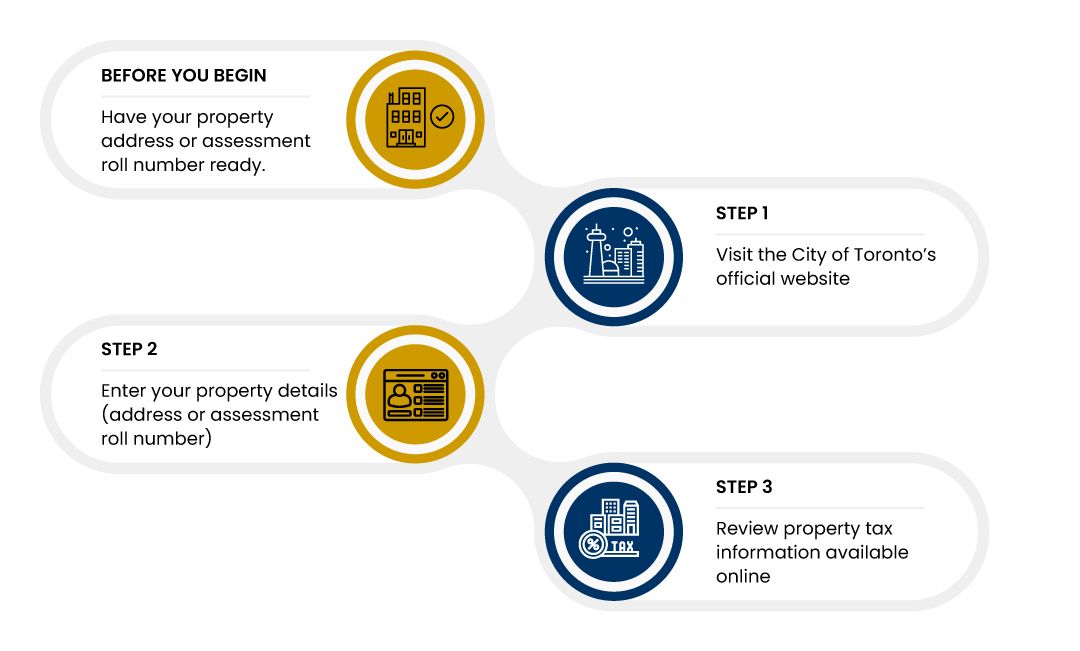
| Step | Description |
| Before You Begin | Have your property address or assessment roll number ready. |
| Step 1: Visit the City of Toronto’s official website | This link directs you to the Property Tax Lookup page. |
| Step 2: Enter your property details (address or assessment roll number) | Upon entering the Property Tax Lookup page, you can either enter the 21-digit Assessment Roll Number or the street address of your property. |
| Step 3: Review property tax information available online | After submitting your application, you will see how much you owe for property taxes, when to pay, any unpaid property taxes, and how many prior years your property has been assessed for. |
For the investors we support at Orbit, property tax is one of the largest recurring expenses that affects ROI. The Toronto Property Tax Lookup Tool gives you a clear picture of ongoing costs, allowing you to compare two potential properties side-by-side. This small step prevents unexpected budget surprises and improves long-term investment planning.
Understanding Your Property Tax Bill in Toronto
To understand your property tax bill in Toronto, you need to know how your MPAC assessment, municipal tax rate, and education levy work together. Toronto property tax is calculated as: (Assessed Value × Municipal Tax Rate) + Education Tax + Levies.
Assessment value and MPAC role
Every couple of years, the MPAC assesses the property market value of your property. This value is based on three different factors; the property location, size and condition. The market value determined by MPAC will form the basis of your tax calculation.
Municipal tax rates
Each year, the City of Toronto sets an overall municipal tax rate based on the annual budget. The municipal tax rate is applied to the assessed property market value and used to calculate the amount you owe based on your property’s assessed value.
Education tax component
A portion of your property tax goes to education funding in Ontario. The province sets this rate annually.
Additional charges or adjustments
Your bill may include an adjustment for sewer usage, trash collection, etc. So it is important to verify the information is accurate prior to paying the bill.
Factors That Affect Property Tax in Toronto
Special levies for sidewalks, roads, or sewer upgrades can show up unexpectedly on a tax bill. Orbit works with property owners to analyze these charges, forecast future levies, and integrate them into long-term budgets so you’re financially prepared.
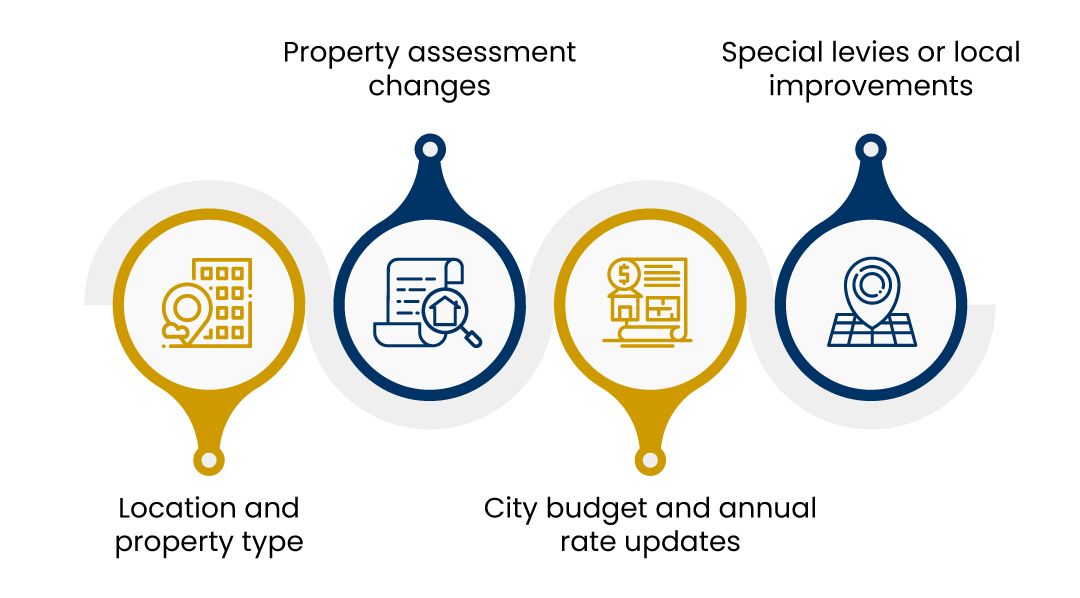
Location and property type
Properties located in areas with a high demand and/or those that have higher-end features, will typically receive a higher assessed value and thus be taxed at a higher rate.
Property assessment changes
If MPAC reschedules your property assessment and determines your property’s market value has increased, you may see an increase in your property taxes.
City budget and annual rate updates
The City of Toronto adjusts the tax rate on an annual basis in order to achieve its budget goals; thus, any change in the tax rate may result in either an increase or decrease to the total property taxes billed to you.
Special levies or local improvements
The City can impose special charges for local improvements, such as the installation of sewer systems and road upgrades. As such, your property taxes may increase as the direct result of either a special improvement levy or an increase in value of your property.
Property Tax Look Up for Buyers and Investors
Purchasing a piece of real estate in the city of Toronto requires careful consideration of the various costs associated with this investment, especially when it comes to property taxes. One way to help determine your overall annual cost for owning a certain piece of real estate is to utilize the Property Tax Lookup Tool for Toronto.
For investors, this tool can be very useful when comparing potential return on investment for different pieces of real estate. By utilizing the property tax lookup tool prior to making an investment decision, an investor will have greater knowledge about what their total investment will be and what they may incur as additional costs beyond the purchase price.
When clients are purchasing a property, Orbit reviews the property tax history to help them understand true ownership costs. This ensures your affordability calculations include not just mortgage payments, but also accurate ongoing tax expenses.
Conclusion: Stay Informed with the Toronto Property Tax Look Up
Key understanding your property taxes is one of the most important aspects of being a good steward of your property. The Property Tax Lookup Tool in Toronto provides great time savings, allows for less error in calculating your taxes, and assists you in making sure you have enough funds available to cover your total costs. Therefore, if you are a homeowner, buyer or investor, you should take advantage of this tool to review your property tax data regularly. With Orbit’s cloud-based bookkeeping systems, property tax instalments are auto-organized into your financial reports. This gives you a real-time view of upcoming payments and reduces year-end scrambling.
Conclusion
Avoiding or reducing capital gains tax in Canada is about smart timing, proper record-keeping, and using the tools available — principal residence exemption, registered accounts, spousal planning, and capital loss offsets.
Whether you’re selling your first property or exiting a business, thoughtful planning before the sale can save thousands. Keep everything organized, report correctly, and seek expert advice when the numbers get large.
Frequently Asked Questions
How do I calculate capital gains in Canada?
Subtract your adjusted cost base and selling expenses from your selling price. Half the result is taxable at your marginal rate.
Is my home exempt from capital gains tax?
If it was your principal residence for every year you owned it, yes. You must still report the sale and claim the exemption.
What is the capital gains inclusion rate?
Currently 50%, meaning only half your gain is taxable. Check for future year updates from the government.
Can I offset gains with losses?
Yes. Capital losses can offset gains from the same or previous years and can be carried forward to future years.
How can I estimate my capital gains tax?
Use an income tax calculator or software to test your marginal rate based on your total income and realized capital gain.
Disclaimer: This article is for general information only and does not constitute professional tax or legal advice. Property tax assessments and rates vary by property and municipality. For personalized guidance, please speak with a qualified tax professional or contact the City of Toronto or MPAC directly