Why Your Non-Profit Needs a Modern Bookkeeping System (And How to Switch)
If your non-profit still runs on spreadsheets, disconnected folders, and month-end reports that arrive too late to be useful, you are not alone.
A lot of organizations start that way. In the early years, Excel feels flexible. Sage may feel familiar. A few workarounds get built. Then the organization grows. More programs, more grants, more restrictions, more reporting. Suddenly, the old system stops being “good enough” and starts creating drag.
That drag is expensive.
It shows up in delayed closes, unclear fund balances, coding errors, board reports that take too long to prepare, and leaders making decisions without current numbers. For non-profit teams, that is more than inconvenient. It affects funding confidence, audit readiness, and operational planning.
Good bookkeeping for non-profits in Canada is not just data entry. It is the financial system behind your programs, your reporting, and your credibility.
The Hidden Cost of Outdated Systems
Most outdated systems fail quietly.
No one gets an alert saying, “Your finance process is now slowing down your mission.” Instead, the warning signs creep in:
- month-end takes too long
- reports need manual cleanup
- grants are tracked outside the accounting system
- different people use different versions of the same spreadsheet
- expenses get coded inconsistently
- finance questions pile up because no one trusts the numbers right away
That is usually the real issue. Trust.
When a finance system is fragmented, leadership loses visibility. The executive director cannot see where things stand this month. Program leads do not know what they have spent. The board gets backward-looking reports instead of timely insight.
And when the books are messy, every downstream task gets harder. Budgeting gets weaker. Audit support takes longer. Grant reporting becomes more manual than it should be.
What Real-Time Financial Visibility Means for Non-Profit Leaders
Real-time visibility does not mean staring at dashboards all day. It means having numbers you can actually use.
For a non-profit leader, that usually looks like: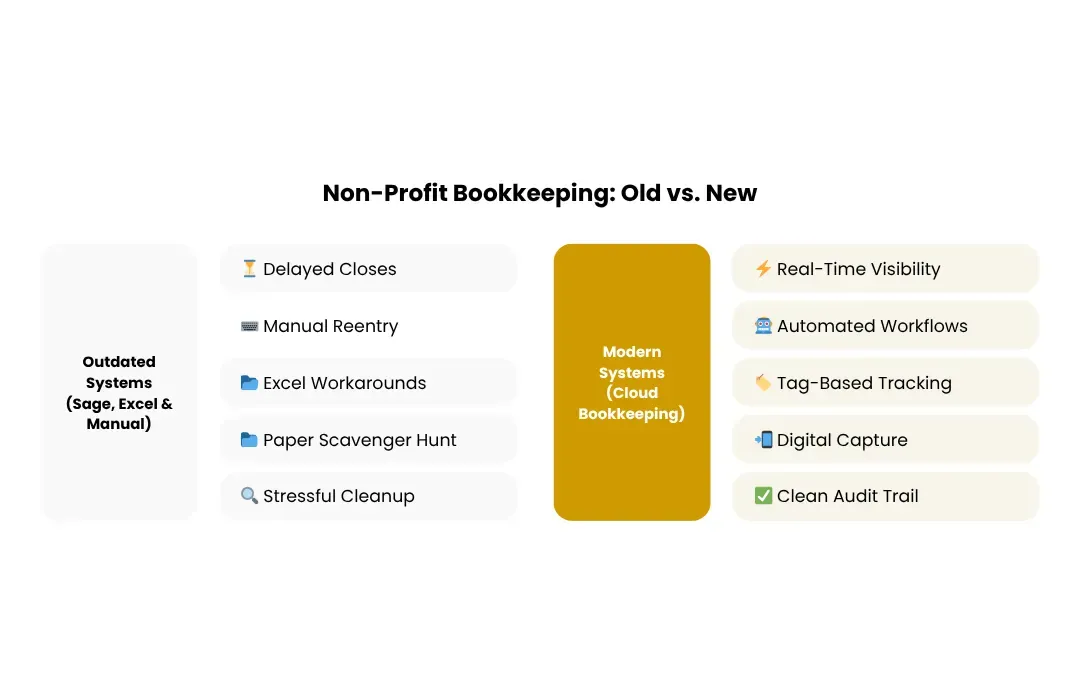
- current cash visibility
- clean program or fund tracking
- faster month-end closes
- clear separation between restricted and unrestricted activity
- easier budget-to-actual reporting
- fewer surprises before board meetings or audit fieldwork
That kind of visibility changes the tone of decision-making. Instead of reacting late, you can act early. Instead of asking, “Can finance pull this by next week?” you can ask better questions now.
Modern bookkeeping systems also help reduce dependence on one person’s memory. That matters more than people think. If all the financial logic lives in one long-serving admin, one external bookkeeper, or one giant spreadsheet, your process is fragile.
A modern system makes the work more repeatable. It gives the organization a finance process, not just a finance person.
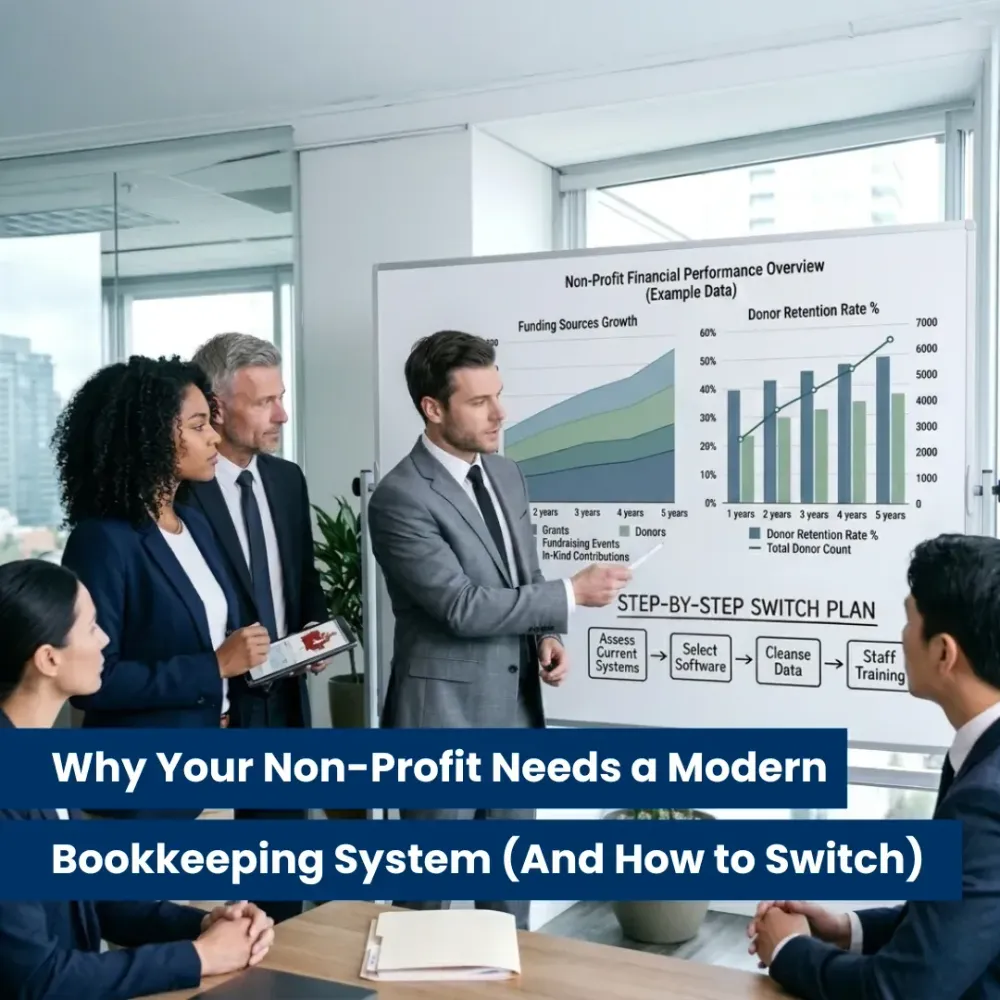
Migrating from Sage or Excel to QuickBooks: What to Expect
This is the part many teams fear most. They assume a system switch will be chaotic, expensive, or disruptive.
It does not have to be.
A good migration usually happens in phases.
1. Clean up the chart of accounts
Before any software move, the structure has to make sense. Old systems often carry years of unused accounts, inconsistent naming, and reporting categories that no longer match how the organization actually works.
2. Decide how to track programs, grants, and restrictions
This is critical. A non-profit should not switch systems just to recreate the same confusion in a nicer interface. The migration should improve how funds, departments, classes, projects, or programs are tracked.
3. Bring over clean opening balances
Not every historical detail needs to move in the same way. Sometimes you migrate summary balances and keep older detail archived. Sometimes deeper transaction history makes sense. The right answer depends on reporting needs and timing.
4. Build reporting around the way leadership actually uses information
This is where many migrations fall short. The software gets installed, but the reporting logic never gets fixed. The result is a prettier system with the same operational pain.
5. Train the people who touch the system
Even the best setup fails if receipt capture, approvals, coding, and reporting responsibilities are unclear.
The goal is not just to “move to QuickBooks.” The goal is to move to a cleaner workflow.
Funder Reporting, Audit Prep, and CRA Compliance
This is where outdated bookkeeping starts becoming risky.
Registered charities and non-profit organizations in Canada are not the same. Registered charities can issue official donation receipts and must file Form T3010 annually. NPOs cannot issue official donation receipts and may instead have filing obligations such as Form T1044 and, in some cases, T2 or T3 returns.
For registered charities, the annual T3010 must be filed no later than six months after the end of the fiscal period. If it is not filed, the CRA may revoke charitable status, which can mean losing the right to issue donation receipts, losing income tax exemption, and facing serious consequences around remaining assets.
That is one reason strong bookkeeping matters. Another is record retention.
CRA says registered charities must keep adequate books and records, keep them at the Canadian address on file with the CRA, and maintain them in an electronically readable format if they are created or stored electronically. General ledgers, financial statements, source documents, and T3010 returns generally need to be kept for six years from the end of the fiscal year they cover. The charity remains responsible for meeting these requirements even if a third-party accountant or bookkeeper maintains the records.
In practical terms, that means your bookkeeping system should help you:
- pull backup quickly
- show a clean audit trail
- support funder restrictions
- produce consistent financial statements
- retrieve source documents without a scavenger hunt
That is what audit readiness really is. Not panic in April. Clean systems in October, January, and all the other months too.
Cost Allocation Strategies That Improve Your Ratios
Non-profits often talk about overhead as if it is the enemy. It is not. Bad allocation is the problem.
If salaries, software, occupancy, and admin costs are posted inconsistently, your program reporting gets distorted. One program looks too expensive. Another looks artificially lean. Management ratios become less useful because the underlying allocations are not stable.
Good cost allocation is not about making the numbers look better. It is about making them more accurate.
That usually means:
- setting a clear policy for shared costs
- using consistent allocation drivers
- documenting why the method makes sense
- reviewing the method as the organization changes
For example, rent might be allocated by square footage. Shared admin salaries might be allocated by time spent. Some software may belong fully to administration, while other tools are clearly program-linked.
The point is consistency. Once the method is documented and applied regularly, board reporting improves, grant reporting becomes easier, and year-end questions are easier to answer.
Choosing the Right Bookkeeping Partner for Your Non-Profit
A non-profit does not just need someone to post transactions.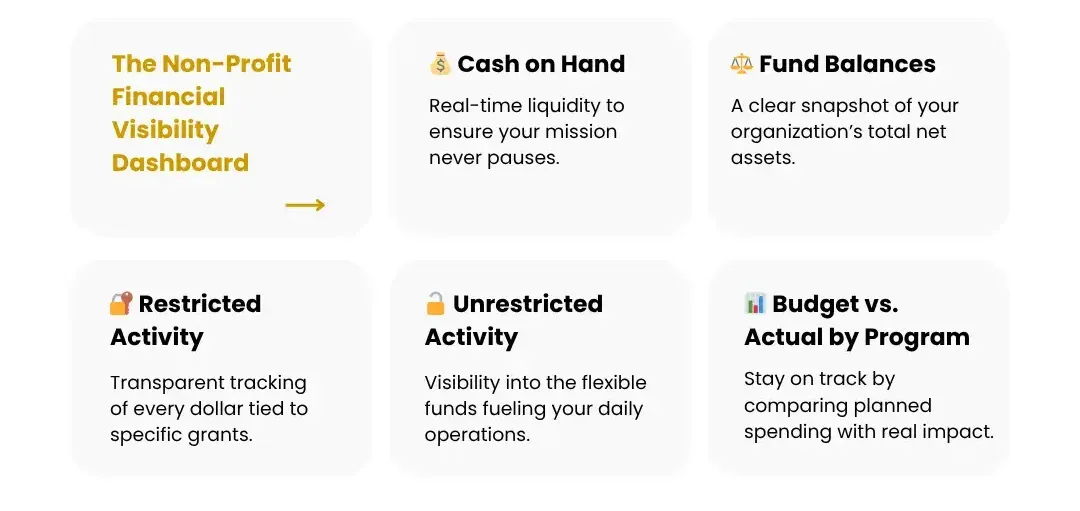
It needs a partner who understands:
- restricted funding
- board reporting timelines
- audit prep pressure
- GST/HST and rebate questions
- charity versus NPO filing differences
- the reality that finance teams in this sector are often stretched thin
The right bookkeeping partner should help your organization close faster, report more clearly, and feel less dependent on workarounds. They should also help you build a system that survives staff turnover and leadership change.
That matters. Because a strong non-profit finance function is not just about compliance. It supports trust with funders, confidence at the board table, and better decisions for the mission itself.
At Orbit, that is the gap we focus on. Not just keeping the books moving, but helping organizations move from reactive finance to usable finance.
Final Thoughts
Outdated systems rarely fail all at once. They wear teams down slowly.
If your non-profit still relies on Excel-heavy reporting, delayed closes, and accounting processes that only one person understands, it may be time for a better setup. Modern bookkeeping gives leaders clearer numbers, cleaner reporting, and a stronger foundation for growth.
That is not just a finance upgrade. It is an operational one.
FAQs
Do registered charities and non-profits in Canada have the same filing obligations?
No. Registered charities must file Form T3010 annually, while NPOs may have to file Form T1044 and sometimes T2 or T3 returns depending on their circumstances.
How long do registered charities need to keep their books and records?
In general, key books and records such as ledgers, financial statements, source documents, and T3010 returns must be kept for six years from the end of the fiscal year they cover, while some records like governing documents and minutes have longer retention requirements.
Can a charity keep records electronically?
Yes. CRA allows electronic records, but they must be maintained in an electronically readable format that can be made available to CRA officials.
What happens if a registered charity misses its T3010 deadline?
The CRA may begin the revocation process for failure to file. If charitable status is revoked, the organization can no longer issue official donation receipts and is no longer exempt from paying income tax.
Legal Disclaimer
This article is provided by Orbit Accountants for general informational purposes only and does not constitute legal, tax, or accounting advice. Your reporting obligations depend on whether your organization is a registered charity, a non-profit organization, or another type of entity. Filing requirements, books and records rules, GST/HST treatment, and audit considerations can vary based on your specific facts. You should seek tailored advice before changing systems, filing returns, or adopting a new cost allocation methodology. For advice specific to your situation, consult a qualified accountant or book a free consultation with Orbit Accountants to get started.