

Difference Between Balance Sheet Income Statement
Understanding financial statements is essential for any business owner, manager, or investor. Among all financial reports, the balance sheet and the income statement are the two most important tools for evaluating a company’s financial health.
At a glance, they may seem similar. Both contain numbers. Both appear in financial reports. But they answer very different questions. One shows what a business owns and owes at a specific moment. The other explains whether the business is actually making money over time.
This guide clearly explains the difference between a balance sheet and an income statement, breaks down their components, compares reporting periods, and shows how each supports better financial decision-making.
What Is a Balance Sheet?
A balance sheet shows a company’s financial position at a single point in time. It answers a simple but critical question:
What does the business own, and how is it financed right now?
This statement lists:
- Assets (what the company owns)
- Liabilities (what the company owes)
- Equity (the owner’s share of the business)
Because it reflects one specific date—often stated as “as of December 31”—the balance sheet is best thought of as a financial snapshot. It plays a major role in assessing stability, liquidity, and long-term financial strength.
Key Elements Included in a Balance Sheet
A balance sheet is built around three core sections: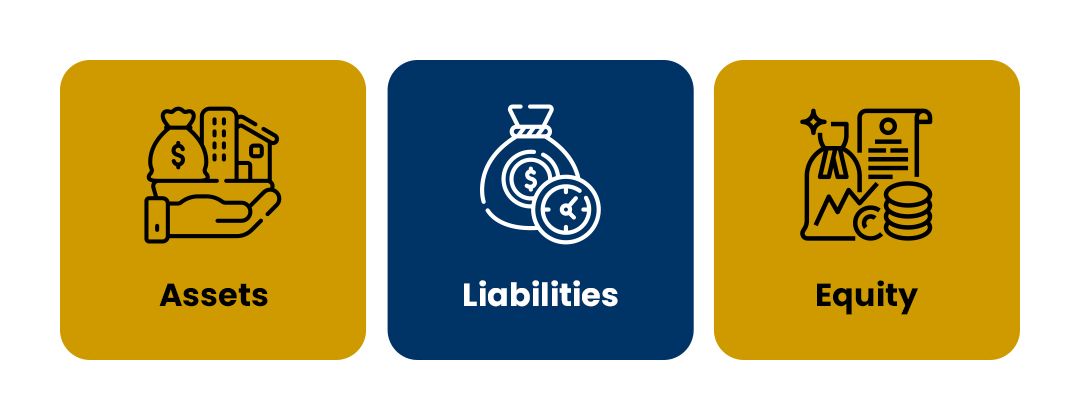
Assets
Assets include all physical and financial resources owned by the business, such as:
- Cash and bank balances
- Inventory
- Equipment and property
- Investments
Liabilities
Liabilities represent obligations the business must pay, including:
- Loans and lines of credit
- Unpaid bills and supplier balances
- Accrued expenses
Equity
Equity represents the owner’s interest in the business. It is calculated by subtracting total liabilities from total assets. This section often includes:
- Owner or shareholder capital
- Retained earnings
Together, these three components provide a clear picture of financial strength and risk exposure.
What Is an Income Statement?
An income statement measures performance, not position. Its purpose is to show whether a business earned a profit or incurred a loss over a specific period of time.
Instead of capturing a single moment, the income statement covers a range—such as a month, quarter, or year. It tracks how money flows through the business by summarizing revenue earned and expenses incurred during that period.
Business owners and managers rely on the income statement to:
- Evaluate profitability
- Compare performance across periods
- Support pricing, budgeting, and cost-control decisions
Components of an Income Statement
An income statement typically includes:
Revenue
Revenue reflects income earned from selling goods or services during the reporting period.
Expenses
Expenses include operating costs such as salaries, rent, marketing, utilities, and materials.
Net Income (or Loss)
When expenses are subtracted from revenue, the result is net income (profit) or net loss. This final figure shows whether the business was financially successful during the period.
This structure highlights a key difference between the income statement and balance sheet:
Key Differences Between Balance Sheet and Income Statement
While both reports are essential, they serve different purposes and are used in different ways.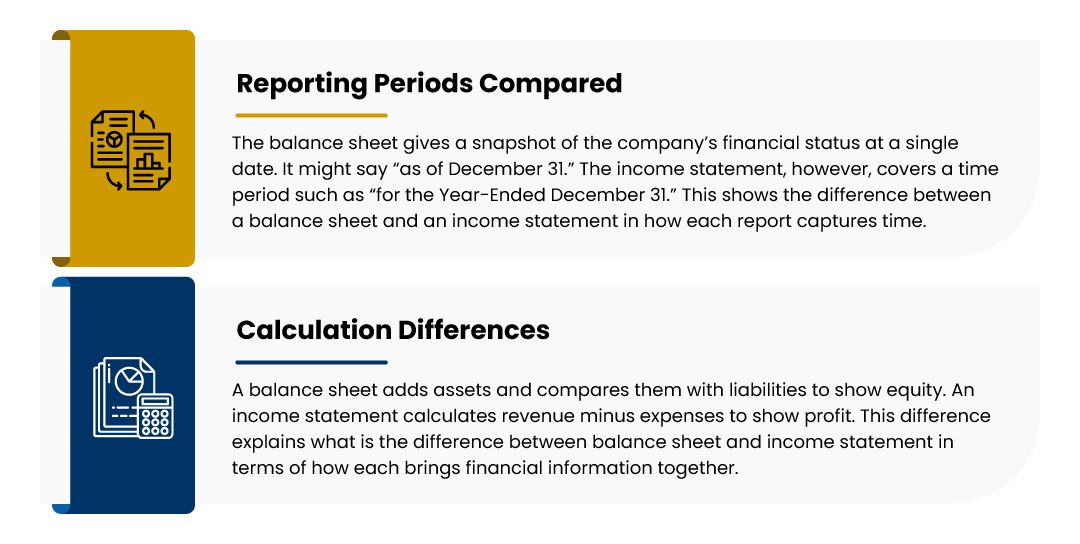
Reporting Periods Compared
The balance sheet shows financial position at one specific date, such as “as of December 31.”
The income statement covers a time period, such as “for the year ended December 31.”
This distinction explains why both reports are needed—one captures a moment, the other captures movement over time.
Calculation Differences
A balance sheet focuses on totals:
- Assets compared against liabilities
- Equity as the remaining value
An income statement focuses on flow:
- Revenue minus expenses
- Resulting in profit or loss
Understanding this difference helps clarify what distinguishes a balance sheet from an income statement in practical financial analysis.
Example: Balance Sheet vs Income Statement
Consider a small bakery called SweetBite at year-end.
SweetBite Balance Sheet (Snapshot)
- Total assets: ₹8,00,000
- Total liabilities: ₹3,00,000
- Equity: ₹5,00,000
This shows SweetBite’s financial position at that specific date.
SweetBite Income Statement (Performance)
- Annual revenue: ₹12,00,000
- Annual expenses: ₹9,00,000
- Net income: ₹3,00,000
Together, these reports tell a complete story. The balance sheet shows stability and resources. The income statement shows profitability and operational success.
Why Both Statements Matter
Relying on only one financial statement gives an incomplete picture.
- Investors use both to evaluate profitability, stability, and growth potential
- Lenders study balance sheets to assess repayment risk
- Business owners and managers use income statements to control costs and balance sheets to manage cash, debt, and expansion
When comparing income statement vs balance sheet, it becomes clear that one shows strength, while the other shows success. Together, they support smarter, more balanced decisions.
Frequently Asked Questions
Why do businesses need both statements?
Because profitability and financial strength are not the same. Together, the reports show how well a business earns money and how stable it is financially.
Which report is more important for financial analysis?
Neither is more important on its own. Income statements focus on profitability, while balance sheets highlight liquidity, leverage, and stability.
Can you give a simple comparison?
A balance sheet shows what a business owns today. An income statement shows what it earned over time.
How do reporting periods differ?
The balance sheet reflects values on one specific date, while the income statement covers performance over a defined period.
Can a profitable company still have a weak balance sheet?
Yes. A business may earn profits but still carry high debt, low cash reserves, or financial risk.